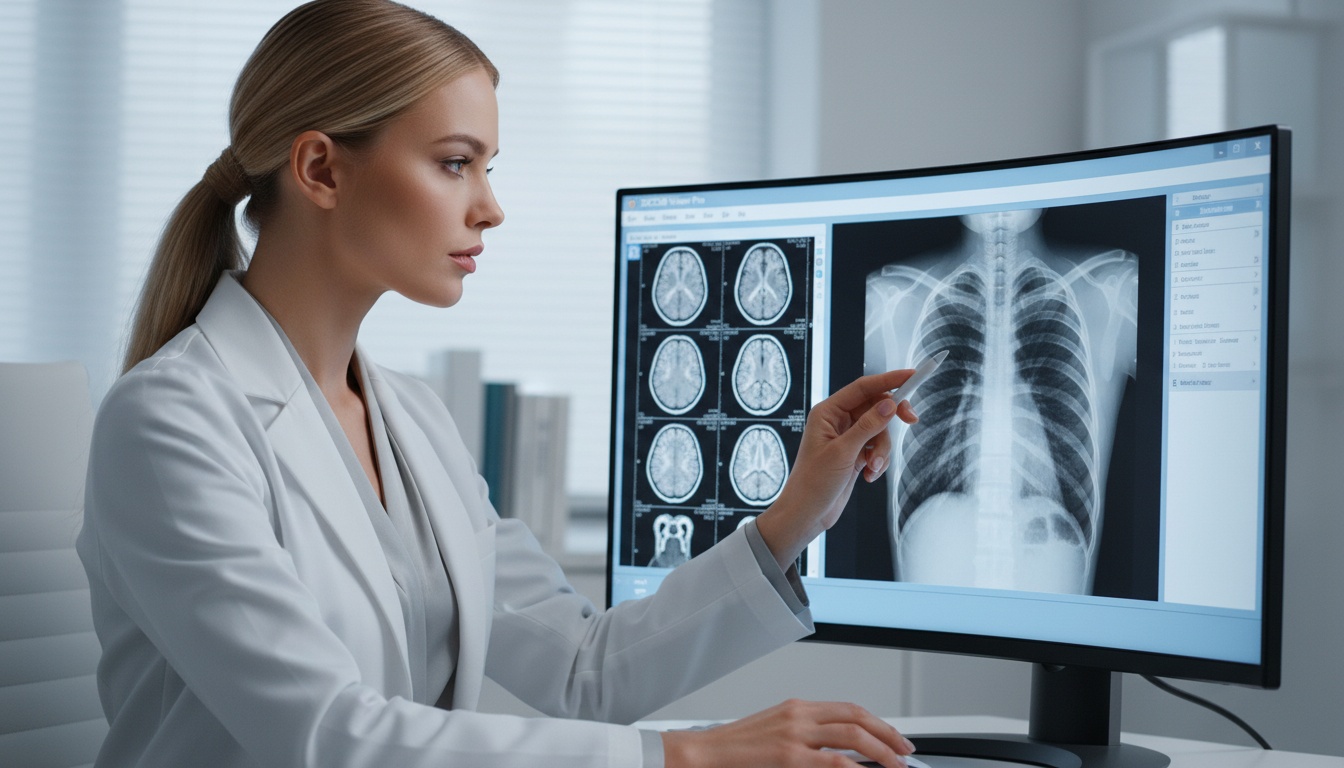
Radiology is about more than pictures. A CT scan is not just a bunch of images; it is something doctors use to help patients, and it has to include information like when it was taken and how it was done so that doctors can look at it and use it to help the patient. This is why radiology can work with different machines across many hospitals and even different countries. The reason this works is because of the DICOM standard.
DICOM, or Digital Imaging and Communications in Medicine, is a set of rules that says how medical pictures should be put together and how machines should talk to each other. It is like a blueprint for how a medical picture should be sent from one machine to another. This is important because it helps machines communicate with each other, even if they are made by different companies.
This guide will tell you what DICOM is, how it is used in life, and how it helps different machines work together. It will also tell you why radiology is starting to use DICOM on the web and, in cloud computing, through something called DICOMweb.
DICOM is a standard for medical imaging information exchange. It specifies:
• File Structure: how an image and its metadata are stored together as a DICOM object.
• Information Model: how studies, series, instances, and identifiers are represented.
• Network Services: how systems discover, query, send, and retrieve images and related objects across a network.
DICOM differs from the image formats we use at home, such as JPEG and PNG. These formats just show us the picture. DICOM is used for medical imaging and stores a lot of important information. It remembers who took the picture, what it is a picture of, when it was taken, and how it was taken. This is important for hospitals and doctors because it helps them know that the picture is correct and easy to find. It also helps them show the picture in a way that's safe for the patient.
DICOM is managed by groups that ensure it works properly. Many companies use DICOM, including the people who make the machines that take the pictures, the people who make the computers that store the pictures, and the people who make the programs that let doctors look at the pictures. Even companies that store images online use DICOM. That is why people often call DICOM the language that medical imaging systems use to talk to each other.
Radiology is something that has to deal with a lot of companies. A hospital might use one company for their CT scanners another company for ultrasound and a company for MRI. They might also have a mix of workstations and archives, from companies. This is a problem because there is no standard that everyone follows. So every time they want to connect two systems they have to do it in a way which can make the whole system a little shaky. Radiology is always going to have to work with different companies, which is what makes it so complicated.
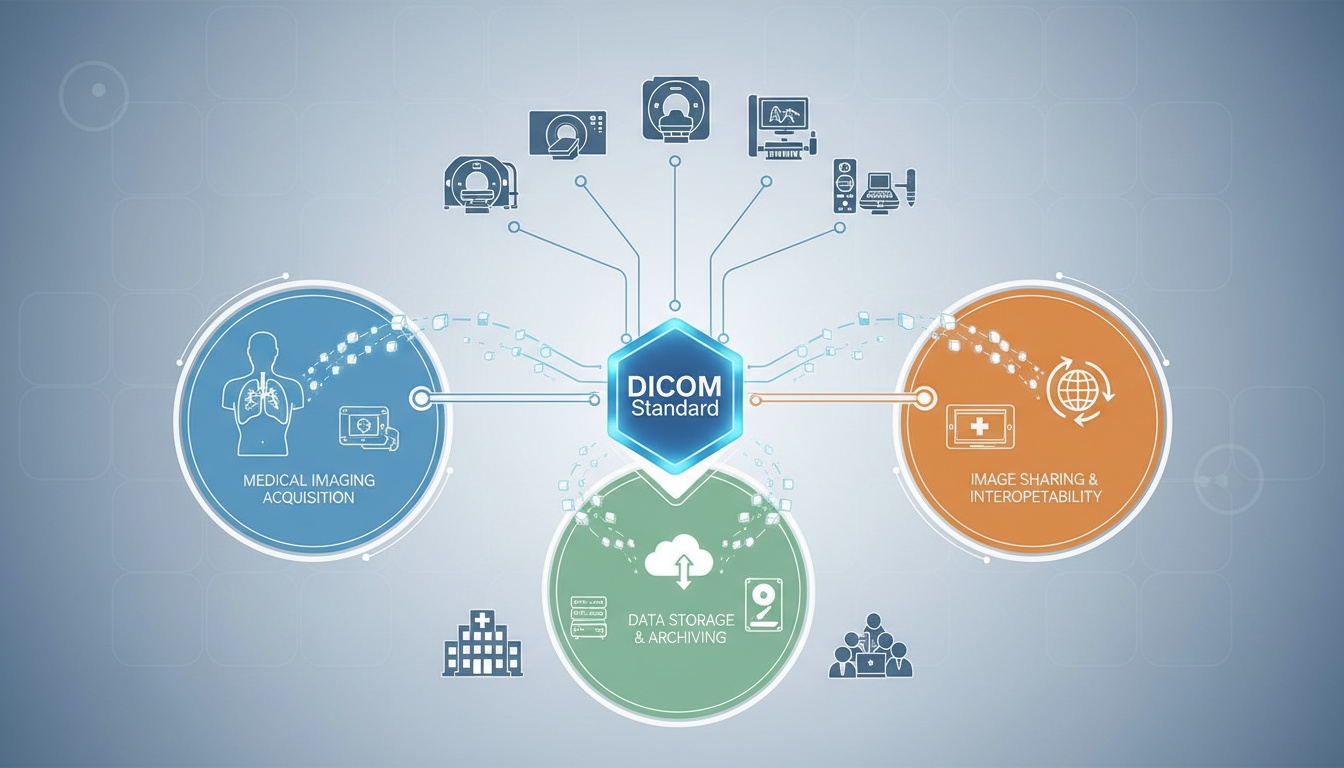
DICOM solved this by providing a shared framework for:
• Interoperable Acquisition: Modalities produce images in a predictable object structure with standardized metadata fields (tags).
• Reliable Storage And Retrieval: PACS/VNA archives can store studies and index them consistently for later retrieval.
• Diagnostic Viewing: Viewers can present images with correct orientation, spacing, series grouping, and display intent.
• Workflow Coordination: Related services (such as worklists and status messages) enable consistency between scheduling systems and imaging devices.
• Sharing And Collaboration: DICOM facilitates the exchange of studies across departments or sites while preserving the clinical context.
Today as radiology is getting bigger and moving to the web and using cloud storage DICOM is still very important. This is often because of DICOMweb, which takes the ideas of DICOM and makes them work with the internet and things, like HTTP and REST.
To evaluate DICOM properly, you need to understand the underlying model. DICOM is not “just a file format.” It is an object-based information framework built around clinical workflow and identity.
DICOM organizes imaging data into a hierarchy that mirrors clinical reality:
• Study: a clinical imaging event (for example, “CT Abdomen/Pelvis with contrast” for a patient on a particular date/time).
• Series: a logical grouping within the study (for example, “axial abdomen,” “coronal reformats,” or “post-contrast series”).
• Instance: a single object within a series (often a single image slice, but it can also be a structured report, a presentation state, or other non-image objects).
This hierarchy is really important because it helps doctors navigate and find the information they need. When doctors look at exams, they do not look for a specific picture like "image 2742.jpg". Instead, they search for something like "the CT abdomen study" and then look at the relevant pictures in that study. The hierarchy is critical for this process because it supports navigation, comparison, and retrieval of the prior CT abdomen study.
A defining feature of DICOM is its use of globally unique identifiers (UIDs). The most important include:
• Studyinstanceuid: uniquely identifies the study.
• Seriesinstanceuid: uniquely identifies the series.
• Sopinstanceuid: uniquely identifies the individual object (the instance).
• Sop Class Uid: identifies the type of object (for example, a CT Image Storage object vs an MR Image Storage object).
In practice, UIDs enable systems to reliably reconcile, merge, retrieve, and reference imaging objects—even across vendors and sites. They also underpin retrieval operations and audit trails because the UID is the object's stable identity, distinct from filenames or local database IDs.
DICOM stores metadata in standardized fields commonly called tags. These tags can include:
• Patient And Study Context (patient Id, Study Date/time, Accession Identifiers Depending On Workflow)
• Acquisition Parameters (modality Settings, Reconstruction Information, Slice Thickness, Pixel Spacing)
• Geometry And Orientation (image Position, Orientation Vectors, Spacing)
• Display Intent And Color Space Details
• Equipment And Institutional Information
This information about the images makes them useful for people and easy to work with. It helps doctors and other medical professionals review images to measure accurately, group similar images, and find the ones they need easily. The information also helps with tasks related to the images, such as checking their quality, conducting research, and using artificial intelligence to analyze them. The information about the images is important for these things because they need more than just the picture itself to understand them correctly.
DICOM has these things called Information Object Definitions that specify what information is needed or can be included for a given image type. This is really useful because it helps create something called SOP Classes. These are like categories of objects that different systems can agree on. For example, you might have a category called "CT Image Storage".
This is important because just saying something supports DICOM is not enough. We need to know what things it supports, like which SOP Classes, how it transfers information, what details it needs, and what extra things it can do. That is why we have these things called conformance statements.
The following diagram shows how DICOM images move around a place where they are viewed to look at images of the body. From when they are first taken to when they are stored, looked at to figure out what is wrong, coordinated with other things, and shared using something called DICOMweb.
 - Presented by PostDICOM.jpg)
Understanding this architectural flow is essential before examining, in more detail, how classic DIMSE services and DICOMweb operate.
The communications part of DICOM works with something called DIMSE, which stands for DICOM Message Service Element. You do not have to remember every message type that DICOM Message Service Element uses. It is really important to understand what the DICOM Message Service Element does when it is working.
C-STORE is the workhorse service used when a modality sends acquired images to a PACS, VNA, or other storage destination. The modality packages the images as DICOM objects and transmits them to a destination application entity (AE). In many environments, routing rules determine whether studies go to a primary PACS, a specialty archive, a research system, or multiple destinations.
C-FIND enables a system to query another system for information about studies, series, or instances. In practical terms, it allows a viewer or workstation to ask an archive, “Do you have studies for this patient?” or “Do you have series for this study UID?” It is a foundation for search-driven workflows in classic DICOM environments.
Retrieval can be performed via C-MOVE or C-GET depending on architecture and access patterns. At a high level, these services enable a client to request studies/series/instances from an archive. In a traditional PACS model, the viewer queries, selects a study, and then triggers retrieval so the relevant objects are delivered to the viewing environment.
DICOM image transfer is what people notice the most, but workflow services are just as important. The Modality Worklist helps make sure the machine has the patient and order information before it starts taking pictures so we do not get the wrong information and have to enter it all over again by hand. We also get messages about what's going on like when something is done which helps us keep track of what is happening from when the order is made to when the pictures are taken and everything is finished.
When we talk about how things work these services are where DICOM image transfer is not just about the pictures it is about making sure everything runs smoothly. This is especially true, in busy places where we need to be accurate and get things done quickly so DICOM becomes the backbone of our workflow.
Classic DICOM networking was designed long before cloud-native patterns and browser-based applications became standard. Modern imaging platforms often need:
• Http/rest-friendly Retrieval And Storage
• Secure Access Patterns Compatible With Modern Identity Systems
• Web And Mobile Clients That Cannot Easily Use Classic Dicom Protocols
• Integration With Analytics And Ai Services That Are Api-driven
That is the context for DICOMweb, a set of web-based services that implement DICOM concepts over HTTP.
QIDO-RS is used for querying studies, series, and instances via HTTP. It brings query capabilities to modern web stacks, useful for cloud platforms, web viewers, and integrators who build imaging workflows into broader clinical systems.
WADO-RS enables the retrieval of DICOM objects through HTTP. This is a cornerstone for web viewers and cloud-based distribution because it allows scalable retrieval patterns that align with CDNs, modern security gateways, and standard web infrastructure.
STOW-RS supports storing DICOM objects into a system over HTTP. This becomes important for cloud ingestion workflows, cross-site imports, and integrations in which devices or services store imaging data on a central platform via web APIs.
In practical strategy terms, DICOMweb makes imaging more accessible to the broader software ecosystem without compromising DICOM’s clinical structure or metadata integrity.
Medical imaging is not a “picture problem.” It is a clinical record and workflow problem. Here is the core difference.
| Capability | DICOM | JPEG/PNG |
| Structured patient + study context | ✅ | ❌ |
| Study/Series organization | ✅ | ❌ |
| Consistent measurement geometry | ✅ | ❌ |
| Standardized interoperability | ✅ | ❌ |
| PACS/archive compatibility | ✅ | ❌ |
| Workflow integration | ✅ | ❌ |
A JPEG can display an image. It cannot reliably carry the metadata and workflow identity that radiology depends on.
Both approaches can coexist. Many systems use classic DICOM for modality-to-PACS transfer and DICOMweb for modern distribution and integration.
| Dimension | Classic DICOM (DIMSE) | DICOMweb |
| Transport | DICOM over TCP | HTTP/REST |
| Best for | Modality integration, legacy PACS workflows | Web viewers, cloud distribution, API integrations |
| Firewall friendliness | Often harder | Typically easier |
| Developer experience | Specialized | Familiar to modern developers |
| Cloud-native scaling | More complex | More natural |
From a strategic perspective, DICOMweb is not replacing classic DICOM everywhere; it is expanding DICOM into environments that require web-first access and cloud scaling.
“Supports DICOM” is not sufficient for a technical evaluation. The real question is: supports DICOM, how?
A DICOM conformance statement is a vendor’s detailed declaration of what their system implements. It typically describes:
• Supported Sop Classes (what Object Types The System Can Send/receive/store)
• Supported Transfer Syntaxes (compression/encoding Methods)
• Supported Services (c-store, C-find, C-move, Worklist, Etc.)
• Attribute Requirements And Behavior Details
• Known Limitations And Configuration Requirements
When we are planning to get systems to work together, conformance statements are really important. They are the difference between thinking we can connect the systems and actually connecting them reliably. Conformance statements help us determine what is going wrong when systems do not work together as they should.
This is very important for networks that span many sites, for example, when we share medical images over long distances and when we move our systems to the cloud. In these situations, conformance statements ensure that systems can exchange images and other important information without losing any data or corrupting the information that describes the data.
It’s common to hear “DICOM supports security,” but security is best understood as layered. DICOM can participate in secure architectures, but compliance is a property of the entire system, not the file format alone.
In practical terms, secure DICOM environments typically rely on:
• Transport Security: secure channels (often TLS) to protect data in transit.
• Access Control: role-based permissions and modern identity integration (SSO/RBAC).
• Auditability: logging and traceability of access and sharing events.
• De-identification Workflows: when images are used for research or external sharing, metadata must be managed appropriately.
• Data Governance: retention policies, backups, disaster recovery, and integrity validation.
A good imaging system should handle DICOM objects with care because they are medical records. These records need to be protected from the moment they are added to the system, when people access them and when they are shared with others. When we use these systems on the cloud we need to make sure that the records are stored safely that only the right people can see them and that we keep an eye on what's happening to them. This is what hospitals and the government expect from us when it comes to DICOM objects.
DICOM enables interoperability, but real-world clinical environments still face recurring challenges. Understanding them helps teams design safer workflows and choose systems that reduce operational risk.
• Metadata Inconsistencies: Different modalities and vendors may populate tags differently. This can affect searchability, series grouping, and downstream analytics.
• Patient Matching Issues: If demographics are entered manually or worklists are misused, studies can be associated with incorrect patient identifiers.
 - Presented by PostDICOM.jpg)
• Orientation And Geometry Pitfalls: Accurate interpretation depends on correct image orientation and spacing. Errors in these fields can affect measurements and 3D reconstructions.
• Compression And Transfer Syntax Mismatches: Not all systems support all compression methods equally. This can cause failed transfers or viewing issues.
• Burned-in Identifiers: Some images may contain “burned-in” text overlays with patient information. This complicates external sharing and research workflows.
A strong DICOM ecosystem is not only about supporting the standard; it is about implementing validation, reconciliation, routing controls, and governance to keep data clinically safe.
As radiology improves, the importance of DICOM actually goes up because new ways of working require information and identity to be in place. For Artificial Intelligence, the information in DICOM is really important because it provides labels and context that are necessary for training and ensuring it works correctly and safely in a clinical setting.
For companies that handle medical images, DICOM helps them combine data from different locations, track ownership, and ensure they can find what they need. For companies that use the cloud and do radiology work from away, DICOM makes it possible to share studies with people in different places while still keeping all the important clinical information
Nowadays, many systems are using both the way of getting DICOM information and a newer way that works well with the web, so companies can support old equipment and new ways of accessing information at the same time.
Cloud imaging is not just “storage somewhere else.” It changes how imaging can be accessed, shared, and operationalized.
A cloud-forward DICOM strategy typically enables:
• Access From Anywhere While Preserving Diagnostic Integrity
• Collaboration And Referral Workflows Without Fragile Manual Exports
• Scalable Distribution For Large Studies And Multi-site Systems
• Integration With Modern Security And Identity Controls
• Cleaner Pathways For Ai And Analytics Services
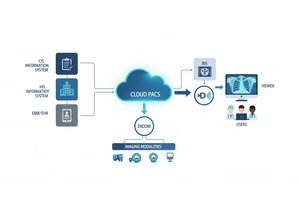
In this context, a cloud PACS and DICOM viewer platform can serve as a clinical collaboration layer that complements or modernizes legacy imaging infrastructure while preserving the reliability of the DICOM standard.
The standard for imaging objects and communication is called DICOM. A Picture Archiving and Communication System or PACS for short is a system that has software and infrastructure. This system stores, indexes, retrieves and manages DICOM studies. The main reason we use PACS is, for use of these DICOM studies.
No. The Digital Imaging and Communications in Medicine standard or DICOM for short is really popular in lots of areas. This includes things, like cardiology and orthopedics. It is also used in dentistry and ophthalmology. Basically DICOM is used in all the specialties that create and manage medical images, like cardiology and orthopedics and dentistry and ophthalmology.
The DICOM standard is really important because it makes sure that object structures and metadata tags are the same. It also helps with identifiers, which are called UIDs and communication services. When we talk about things working together like interoperability it really depends on how people implement the DICOM standard. That is why what people say about how they follow the rules, which are called conformance statements really matter for the DICOM standard.
A Unique Identifier is a code that is used everywhere to label studies, series and instances. This Unique Identifier helps computer systems find and get the imaging objects, from different places and companies. The Unique Identifier is very important because it makes sure that the right information is found and retrieved.
DICOMweb is a way of using DICOM services on the web. It uses HTTP and REST to do things with DICOM objects. You can use DICOMweb to look for things get things and store things. DICOMweb does all this using things that're normal for the web.
Yes. DICOM viewers can open studies on your own computer but when it comes to clinical workflow features like searching for something comparing to prior studies, routing and governance these things are usually taken care of by PACS or big enterprise platforms. DICOM viewers are just not set up to handle all of that. So you would use DICOM viewers for the studies. Then use PACS or enterprise platforms for the rest of the clinical workflow features.
Is DICOM secure by itself?
DICOM participates in secure architectures, but security and compliance depend on the full system implementation, including transport security, access controls, auditing, and governance.
Common causes include missing or inconsistent metadata, unsupported transfer syntaxes, or orientation/spacing issues that affect rendering and measurement accuracy.
It is a vendor document that describes exactly which DICOM services, SOP classes, and transfer syntaxes their system supports, including any limitations and configuration details.
DICOM’s metadata provides structured context and consistent identity, which helps AI workflows reliably ingest studies and maintain traceability throughout pipelines.
|
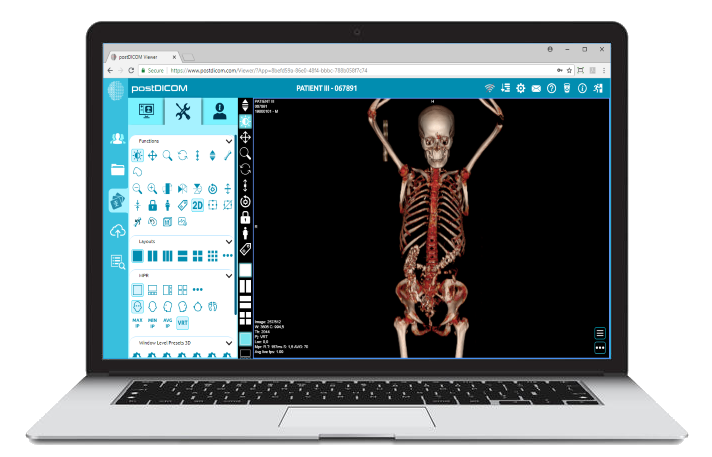
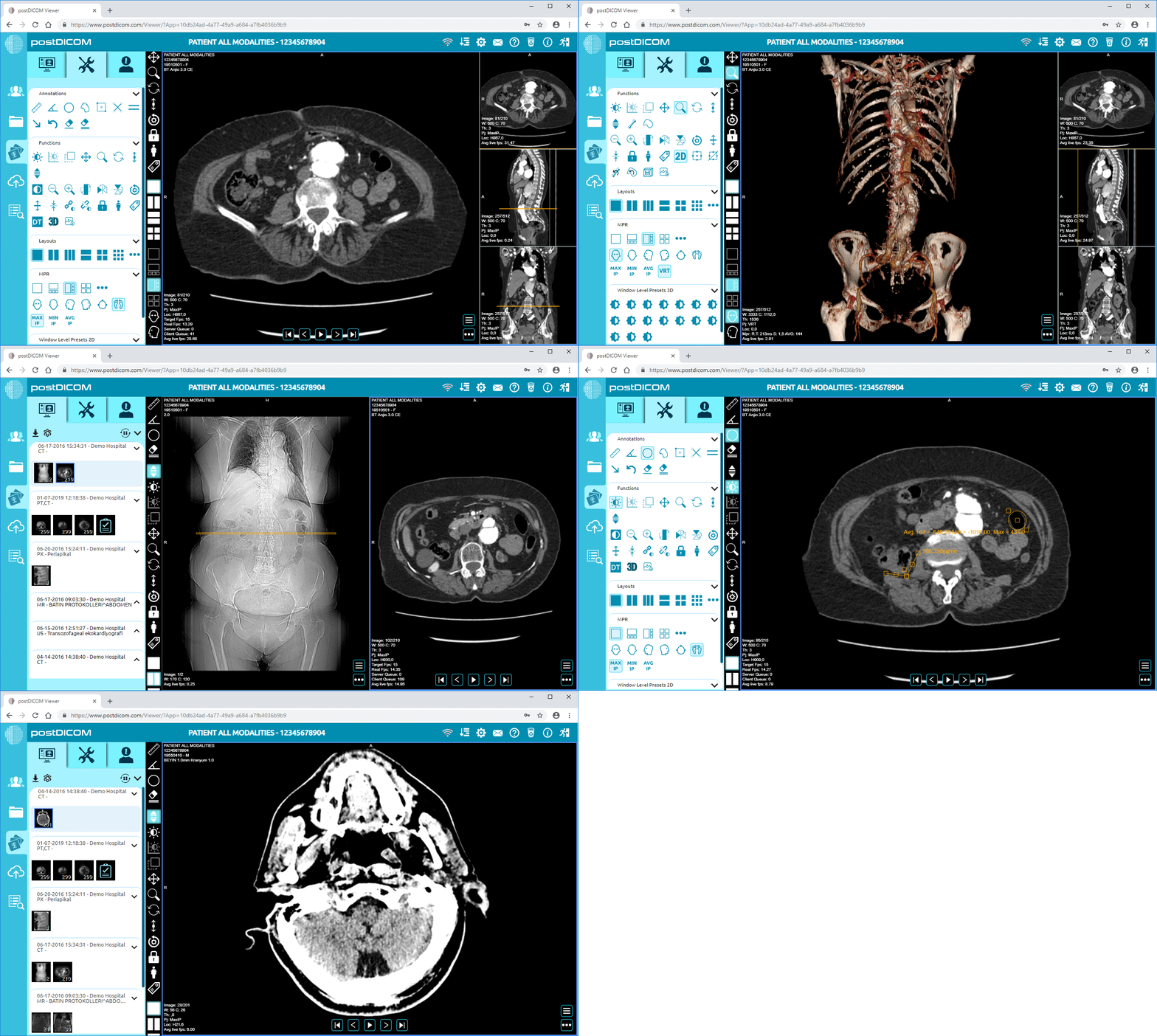
Cloud PACS and Online DICOM ViewerUpload DICOM images and clinical documents to PostDICOM servers. Store, view, collaborate, and share your medical imaging files. |